Plr books vault
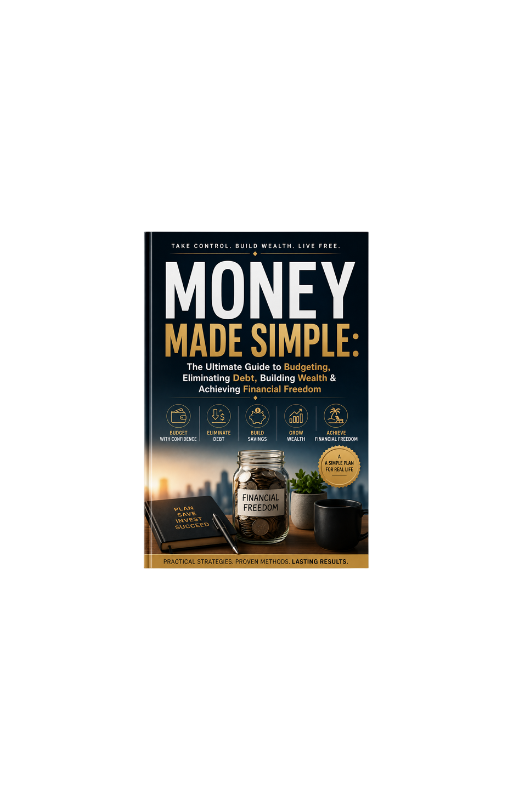
Personal Finance Budgeting Guide
Personal Finance Budgeting Guide
Couldn't load pickup availability
📋 LICENSE: PLR + MRR (Full Rights Included)
✅ Edit & rebrand this content under your own name
✅ Resell as-is or after modification
✅ Use as a bonus, lead magnet, or standalone paid product
✅ Add to your own bundles or courses
✅ Pass resell rights to your own customers (MRR)
Full license terms →Take Control of Your Money. Build Better Habits. Create Your Financial Future.
Money affects almost every part of your life.
Where you live.
The choices you can make.
The opportunities you can take.
The stress you carry.
The future you're able to build.
Yet most people are expected to manage money without ever being properly taught how it works.
Money Made Simple was created to change that.
This practical personal-finance guide takes complicated financial concepts and breaks them down into clear, understandable ideas you can actually apply to your own life.
Instead of treating money as something mysterious, overwhelming, or reserved for people who already have wealth, this book teaches you to see money for what it really is:
A tool.
A tool you can learn to understand, manage, and use to build a stronger financial future.
🧠 Start With Your Relationship With Money
Before you change your budget, savings, debt, or investments, you need to understand something deeper:
Your financial behavior is influenced by the beliefs and experiences you've developed around money.
The book begins by exploring the psychology behind money, including common "money scripts" such as:
- Money avoidance
- Money worship
- Money status
- Money vigilance
These beliefs can quietly influence how you spend, save, invest, and make financial decisions.
You'll learn how to recognize unhealthy patterns and begin building a more intentional relationship with money.
Because sometimes the first financial change isn't in your bank account.
It's in the way you think about your bank account.
📊 Know Exactly Where You Stand
You can't improve what you refuse to look at.
That's why the guide takes you through understanding your actual financial position.
You'll learn to look at your:
- Income
- Expenses
- Savings
- Debts
- Interest rates
- Credit
- Net worth
- Financial goals
The book encourages you to face the numbers honestly rather than avoiding them.
Because knowing exactly where you are gives you something extremely valuable:
A starting point.
💵 Build a Budget That Actually Works
Forget unrealistic budgets that look perfect on paper and collapse after a week.
This book focuses on creating a budgeting system that reflects real life.
You'll learn how to:
- Track your spending
- Separate needs from wants
- Plan for irregular expenses
- Create sinking funds
- Automate financial decisions
- Adjust your budget when life changes
- Build a system you can actually maintain
The book explains how sinking funds can turn predictable future expenses into planned monthly contributions instead of financial emergencies.
It also emphasizes automation because automatic savings, debt payments, investments, and bills can reduce the number of financial decisions you have to make every day.
🛡️ Build Your Emergency Fund
Life doesn't always follow your budget.
Cars break.
Appliances fail.
Medical expenses appear.
Jobs change.
Unexpected bills arrive.
An emergency fund gives you a financial buffer when those situations happen.
The book explains why an emergency fund isn't simply another savings account — it acts as a financial firewall, helping protect you from being forced back into debt when unexpected expenses occur.
You'll learn about:
- Why emergency savings matter
- How much to save
- Where emergency money belongs
- Common emergency-fund mistakes
- The psychology of saving
- Automatic savings strategies
💳 Take Control of Your Debt
Debt can feel overwhelming when you look at it as one giant problem.
This guide teaches you to break it down.
You'll learn how to:
- Create a complete debt inventory
- Understand interest rates
- Prioritize different debts
- Compare repayment strategies
- Reduce interest costs
- Build momentum
- Track your progress
The book explains both major debt-payoff approaches:
Debt Avalanche
Focus on the highest-interest debt first to minimize interest costs.
Debt Snowball
Focus on smaller balances first to create psychological wins and momentum.
Instead of simply telling you to "pay off your debt," the book helps you understand how to create a strategy that fits your situation.
⭐ Understand & Improve Your Credit
Your credit can affect major parts of your financial life.
The book dedicates an entire chapter to understanding credit and how it works.
You'll explore the factors that influence credit and the habits that can help you build a stronger credit profile over time.
Understanding credit means you're no longer simply reacting to a number.
You understand what creates it and how your financial behavior affects it.
📈 Discover the Power of Compound Interest
One of the most powerful ideas in personal finance is also one of the easiest to underestimate:
Time.
The book explains compound interest and why starting early can matter enormously.
You'll learn why consistent contributions can become much more powerful over long periods and why waiting for the "perfect" financial moment can have a significant opportunity cost.
The guide emphasizes a simple principle:
You don't need to start big. You need to start and remain consistent.
📊 Learn Investing Without the Jargon
For many beginners, investing can feel intimidating.
Stocks.
Bonds.
Funds.
Risk.
Returns.
Retirement accounts.
Market volatility.
Where do you even begin?
The investing chapter breaks down the foundations in a clearer, beginner-friendly way. The book explains what investing actually is, why it carries risk, and how long-term investing differs from short-term speculation.
You'll learn about fundamental investment concepts and how to think about:
- Stocks
- Bonds
- Funds
- Risk
- Diversification
- Time horizon
- Long-term investing
The objective isn't to turn you into a professional investor.
It's to give you enough understanding to stop feeling completely lost when the subject comes up.
🏖️ Start Thinking Seriously About Retirement
Retirement may feel far away.
That's exactly why planning early can matter.
The guide includes a dedicated chapter on Retirement Planning, helping you understand how today's decisions can influence your future financial options.
You'll explore the importance of:
- Starting early
- Consistent investing
- Retirement goals
- Long-term planning
- Compound growth
- Financial independence
The goal is to stop thinking about retirement as something you'll "figure out later."
🛡️ Protect the Wealth You're Building
Building wealth is only one part of financial planning.
You also need to protect it.
The book covers Protection & Insurance, including the importance of protecting your income and preparing for events that could otherwise seriously damage your financial foundation.
You'll learn why insurance should be viewed as part of a broader financial strategy rather than simply another expense.
❤️ Prepare for Major Life Events
Your financial life changes as your life changes.
Marriage.
Children.
Buying a home.
Career changes.
Divorce.
Loss of a loved one.
The book dedicates a complete chapter to Life Events & Financial Transitions, helping readers think about the financial consequences of major changes before they happen.
You'll learn how to have more productive financial conversations and prepare for major transitions instead of dealing with them only after a crisis occurs.
🎯 Create Your Personal Financial Freedom Plan
Financial freedom doesn't look identical for everyone.
For one person it may mean retiring early.
For another, it may mean being able to leave a stressful job.
For someone else, it may simply mean having enough savings to stop worrying about every unexpected expense.
The book encourages you to define your own version of financial freedom and work backward from that vision.
You'll learn to connect:
Your Goals → Your Numbers → Your Habits → Your Plan → Your Future
Your financial plan isn't supposed to be perfect forever.
It should evolve as your income, goals, relationships, responsibilities, and priorities change.
🔥 This Isn't About Getting Rich Overnight
One of the strongest messages throughout the book is that meaningful financial progress usually isn't dramatic.
It's consistent.
The conclusion uses the concept of kaizen — continuous improvement through small, consistent changes — as a model for personal finance.
You don't have to:
- Become debt-free overnight
- Save thousands immediately
- Completely transform your lifestyle
- Become an expert investor
Instead:
Make one better financial decision.
Then another.
Then another.
Over time, those decisions compound.
👤 Who Is This Ebook For?
Money Made Simple is ideal for:
- Young adults
- Working professionals
- People living paycheck to paycheck
- Beginners learning personal finance
- People struggling with debt
- Anyone who wants to start saving
- Beginner investors
- People planning for retirement
- Couples planning their financial future
- Anyone who wants greater financial independence
The book is particularly aimed at people who feel they were never properly taught how to manage money and want a practical starting point.
📦 What You'll Get
- 📘 Complete digital ebook
- 💰 Practical personal-finance guidance
- 🧠 Money mindset strategies
- 📊 Financial-number tracking guidance
- 💵 Budgeting strategies
- 🛡️ Emergency-fund guidance
- 💳 Debt-payoff strategies
- ⭐ Credit education
- 📈 Compound-interest explanation
- 📊 Beginner investing guidance
- 🏖️ Retirement-planning guidance
- 🛡️ Insurance & financial protection guidance
- ❤️ Life-event financial planning
- 🎯 Personal financial-freedom planning
- 📝 Practical financial exercises & reflection points
- 📚 Real-life examples and stories
- 💻 PDF digital format
- 📱 Compatible with phone, tablet, laptop & computer
📋 Product Specifications
- Product Type: Digital Ebook
- Title: Money Made Simple
- Format: PDF
- Pages: 148
- Language: English
- Category: Personal Finance / Money / Financial Education
- Chapters: 12
- Main Topics: Budgeting, Saving, Debt, Credit, Investing, Retirement & Financial Freedom
- Author: James R. Calloway
- Delivery: Digital Download
Share